
Advanced cancer treatments
From precision tumour ablation to minimally invasive interventional procedures, we help you explore innovative cancer care options, matched to your diagnosis, history and needs.
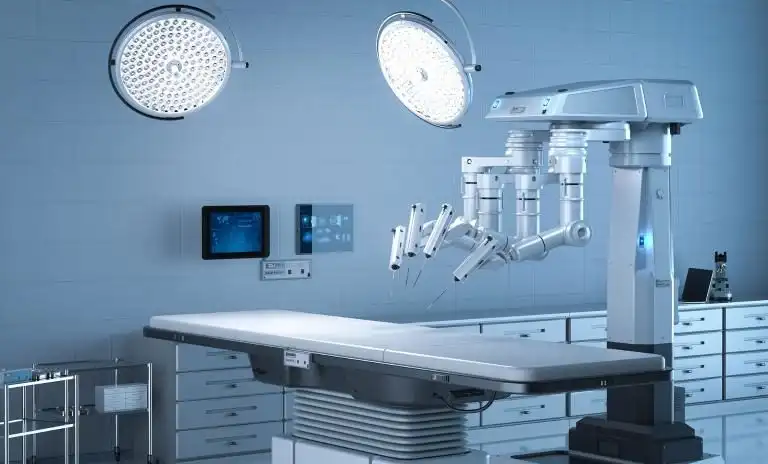
Surgery is no longer the only answer
For generations, a cancer diagnosis often meant one path: surgery to remove the tumour. Today, medicine offers far more. Precision technologies can target tumours through a needle, a probe or a blood vessel, opening doors for patients who were once told there were no options left.
Surgery
Removing the tumour through an operation, the earliest form of cancer treatment.
Radiation
High-energy rays are used to destroy cancer cells and shrink tumours.
Chemotherapy
Medicines that travel through the body to attack fast-dividing cells.
Targeted & immunotherapy
Treatments that act on specific cancer features or help the immune system fight back.
Precision & minimally invasive
Image-guided ablation and interventional therapies that target tumours with pinpoint accuracy.
One main path
- Large incisions for many tumours
- Limited options if a tumour couldn’t be removed
- Often longer hospital stays and recovery
- Similar approach for many patients
Many more possibilities
- Small punctures, probes or catheters in suitable cases
- Options for selected tumours considered inoperable
- Recovery may be quicker for many procedures
- Plans personalised to the tumour and the patient
“The right treatment today is not just about removing cancer. It’s about choosing the most precise, least invasive and most suitable option for each patient.”

Every cancer is different, and so is every treatment journey
New technologies and specialised approaches now offer additional options for selected patients, often alongside surgery, chemotherapy and radiation rather than instead of them.
At Rekosh Healthcare, we help you explore these options through personalised medical guidance, specialist consultations and treatment coordination, so innovative cancer care is easier to reach.
- Precision-based tumour ablation
- Minimally invasive interventional procedures
- Advanced immunotherapy and targeted radiation techniques
Three advanced approaches
Tap a treatment to see how it works, step by step.
NanoKnife (IRE)
Controlled electrical pulses open microscopic pores in tumour cells.
How it worksCryosurgical Ablation
Freezing probes form ice crystals that destroy tumour tissue.
How it worksMicrovascular Interventional Therapy
Treatment delivered through the vessels that feed the tumour.
How it worksNanoKnife
Precision-based tumour treatment using electrical pulses.
NanoKnife is an advanced tumour ablation technique that uses controlled electrical pulses to destroy targeted cancer cells[cite: 30]. Unlike thermal ablation, which uses heat or extreme cold, IRE creates permanent microscopic pores in the membranes of targeted tumour cells, disrupting their function and leading to cell death[cite: 30].
Because it is non-thermal, it may help preserve surrounding structures such as blood vessels and bile ducts in appropriately selected cases[cite: 30].
How it works
Imaging
The tumour is evaluated using imaging investigations.
Probe placement
Thin electrode probes are positioned around the tumour.
Electrical pulses
Controlled pulses are delivered through the probes.
Follow-up imaging
Imaging assesses the treatment response.
Cell death
The treated cells undergo cell death.
Membrane disruption
Pulses disrupt the membranes of targeted cancer cells.
Potential applications
Potential benefits
- Non-thermal tumour destruction
- Image-guided treatment planning
- May preserve selected surrounding structures
- Minimally invasive electrode placement in suitable cases
- An option when thermal ablation is challenging
Cryosurgical Ablation
Harnessing extreme cold to target tumours.
Cryosurgical ablation is a minimally invasive procedure that uses extremely low temperatures to destroy targeted tumour tissue.
Specialised probes placed into or around the tumour generate freezing temperatures, so ice crystals form inside the targeted cells. Repeated freezing and thawing cycles damage cell structures and destroy the tumour tissue.
How it works
Locate the tumour
Imaging identifies the exact tumour location.
Insert cryoprobe
A specialised cryoprobe is placed in the target area.
Extreme cold
Very low temperatures are generated at the probe tip.
Necrosis & healing
Treated tissue gradually breaks down and heals.
Freeze–thaw cycles
Repeated cycles cause cellular damage.
Ice crystals form
Ice crystals develop within the tumour tissue.
Potential applications
Potential benefits
- Minimally invasive approach
- Precise targeting of selected tumour sites
- May reduce the need for large incisions
- Can be repeated in selected cases
- May be combined with other cancer treatments
- Useful for local tumour control and selected cancer-related pain
Microvascular Interventional Therapy
Targeting the blood supply that supports tumour growth.
Many solid tumours develop their own network of blood vessels to receive oxygen and nutrients[cite: 26]. This approach uses specialised catheters and image guidance to reach those vessels and deliver treatment directly to the targeted area[cite: 26].
It includes Transarterial Infusion (TAI), Transarterial Embolization (TAE) and Transarterial Chemoembolization (TACE)[cite: 26].
How it works
Small access site
A thin catheter is introduced into an artery.
Image-guided navigation
The catheter is steered towards the tumour’s vessels.
Tumour-feeding artery
The catheter reaches the vessels supplying the tumour.
TAI
Chemotherapy is delivered directly into the tumour-feeding artery.
TAE
Embolic materials reduce or block the tumour’s blood supply.
TACE
Chemotherapy and embolization are combined.
Potential applications
Potential benefits
- Targeted delivery of therapeutic agents
- Minimally invasive, catheter-based approach
- Less need for large surgical incisions
- May reduce systemic chemotherapy exposure in some procedures
- Can be combined with other cancer treatments
- May help control tumour growth in selected patients
At a glance
| NanoKnife (IRE) | Cryoablation | Microvascular | |
|---|---|---|---|
| How it works | Electrical pulses open pores in cell membranes | Extreme cold forms ice crystals in tumour tissue | Treatment delivered through tumour-feeding arteries |
| Uses heat or cold? | Neither (non-thermal) | Cold | Neither |
| Approach | Image-guided electrode probes | Image-guided cryoprobes, often through small skin punctures | Catheter through a small arterial access site |
| Examples of uses | Pancreas, liver, kidney, prostate | Liver, kidney, lung, prostate, bone | Liver, kidney, pancreas, lung, bone |
Looking for immunotherapy?
Explore DC-CIK, NsDC-T, NK and HANK cellular immunotherapy approaches.
Frequently asked questions
Answers about NanoKnife, cryoablation and microvascular interventional therapy.
NanoKnife is typically performed as a minimally invasive procedure under imaging guidance. Instead of open surgery with large incisions, thin electrode needles are positioned precisely around the tumour through small punctures, though it can also be combined with surgery when indicated.
No. NanoKnife utilizes Irreversible Electroporation (IRE), which is a non-thermal technology. It delivers high-voltage, electrical pulses that create irreversible microscopic pores in cancer cell membranes without generating intense heat or extreme freezing temperatures.
NanoKnife is commonly evaluated for tumours in challenging anatomical locations, including pancreatic cancer, liver cancer, kidney cancer, prostate cancer, and selected tumours situated near critical blood vessels or bile ducts.
NanoKnife is a targeted local therapy aimed at destroying specific tumour masses. It does not replace systemic therapies like chemotherapy or immunotherapy, which circulate through the body to manage micro-metastases, but it is often used alongside them.
Suitability depends on tumour size, location, patient cardiac history, and overall clinical condition. A multidisciplinary tumour board evaluation is required to confirm whether NanoKnife is appropriate for your diagnosis.
Cryoablation is an image-guided technique that uses specialised probes (cryoprobes) to deliver extreme sub-zero temperatures directly into a tumour, forming an ice ball that freezes and destroys cancerous cells.
No. Medical cryoablation uses compressed argon gas within enclosed probes to generate lethal temperatures as low as -140°C to -160°C inside the tumour, causing cellular dehydration, vascular thrombosis, and cell rupture.
Yes, in select cases. It is frequently employed for oligometastatic lesions (such as limited metastases in the liver, lungs, or bones) and for palliative tumour volume reduction to relieve localised cancer pain.
Yes. Because cryoablation does not carry the cumulative radiation dose limits of radiotherapy, it can often be repeated safely if new lesions emerge or if residual tumour margins require re-treatment.
No. In most cases, it is a percutaneous procedure performed through tiny needle puncture marks in the skin under CT or ultrasound guidance, resulting in shorter recovery periods and minimal scarring.
Microvascular interventional therapy targets the tumour’s dedicated vascular supply directly through arterial catheters, delivering high concentrations of therapeutic agents or embolising particles directly to starve the tumour of nutrients.
Yes. Conventional intravenous chemotherapy circulates through your entire body, affecting healthy organs as well. Interventional procedures like TAI and TACE infuse medication directly into the specific artery feeding the tumour, significantly reducing systemic toxicity.
Yes, liver cancer (both primary Hepatocellular Carcinoma and secondary liver metastases) is one of the primary indications, as healthy liver tissue draws blood from the portal vein while tumours predominantly feed off the hepatic artery.
Find out which option may suit you
Share your diagnosis and reports. We’ll connect you with specialists who can assess your suitability for advanced treatment.
Medical disclaimer: The treatments described are suitable only for selected patients and may not be appropriate for every cancer type or stage. This information is educational and does not constitute a diagnosis, treatment recommendation or guarantee of outcome. All treatment decisions should be made with qualified oncology specialists after a detailed assessment.
Ask about advanced treatment
Share your details and our team will get in touch with you.
- Personalised guidance based on your reports
- Information on hospitals and treatment options
- Support with coordination and next steps
Thank You!
Your enquiry has been received successfully. Our clinical coordinator will get in touch with you shortly.